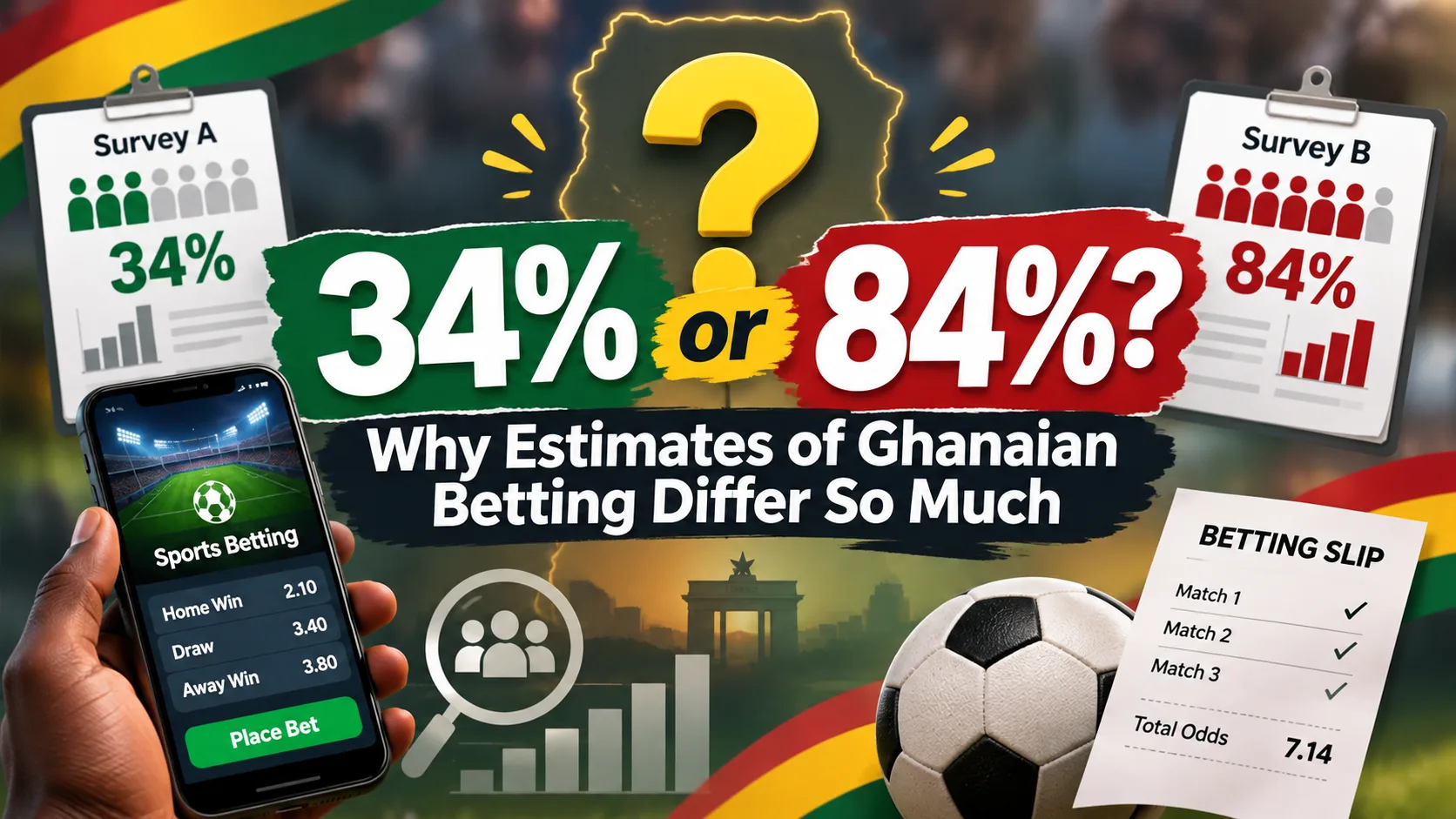
How many Ghanaians bet? Depending on which figure you read, the answer is anywhere between about a third of adults and more than eight in ten. When we compared the published estimates in our Ghana Betting Barometer, they ranged from 34% to 84%.
That gap looks like a contradiction, but it is not. At Gamblecode, our reading is that most of these figures are not wrong. They simply measure different things.
Different people, different questions
A survey of young people in cities will always show more betting than a survey of the whole country, including rural areas and older adults. A survey run online will reach people who are already connected, and those people bet more often than people who are offline.
The question itself also matters.
“Have you ever placed a bet?” and “Have you bet in the past month?” are very different questions. The first produces a high number, because it counts anyone who tried once. The second produces a lower one, because it only counts people who are active now.
Different periods
Betting habits change quickly. Mobile money, cheaper smartphones and aggressive advertising have all changed how people bet in a few years. A figure collected several years ago may not describe the market today, even if it was accurate when published.
Three questions to ask about any betting statistic
- Who was asked? Check the sample size, the age range and whether it covers urban and rural areas.
- What was measured? Ever, past year, past month or weekly. The wording changes the result.
- When was it measured? An old figure may no longer reflect today’s habits.
What this means for readers
When you see a headline claiming that most Ghanaians bet, or that only a few do, check these three points before sharing it. A single number without its method is easy to repeat and hard to trust.
For licensing and market rules, the reference point is the Gaming Commission of Ghana. Betting is for adults aged 18 and over. If gambling stops being fun, take a break and seek support