
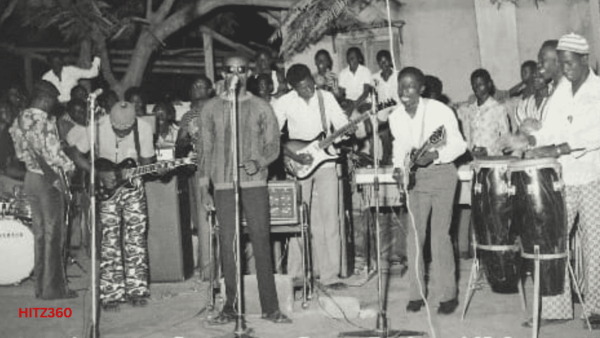

Why Old Highlife Still Sounds Better Today? There is a quiet confidence in old highlife music that does not beg for attention. It does not rush the listener, it simply arrives, settles into the room, and stays. That alone already separates it from much of what the 2010s and 2020s have produced.
Highlife was never in a hurry. Songs like Kyenkyen Bi Adi Mawu by K Frimpong and his Cubano Fiestas, Obra by Nana Ampadu and his African Brothers Band in its many classic interpretations, Daddy Lumba’s Aben Wo Aha era records, or Amakye Dede’s Iron Boy were built to live long lives. They were not chasing charts. They were chasing meaning. The music knew it would outlast the moment.
Lyrics come first. Old highlife respected language. Whether it was Akan, Ga, Ewe, or a careful mix with English, words were treated as tools, not fillers. Consider Nana Ampadu’s storytelling. Every verse moved the plot forward. The listener did not just hear a song. He entered a situation, a warning, or a confession. Daddy Lumba’s early work carried restraint and wit. He suggested more than he said. Even love songs carried caution, irony, and social awareness.
Compare this to many modern hits. A song may repeat the same line for three minutes with little variation. Hooks are loud but shallow. The message often ends where it begins. This is not a problem of language ability. It is a problem of intent. Many current songs are written to trend, not to speak. Once the trend passes, the song collapses with it.
Instrumentation is another clear divide. Old highlife breathed through real instruments. Guitars were not loops. They were conversations. The bass walked with purpose. Horns announced themselves like guests entering a room. Listen to Ebo Taylor’s records. Each instrument knows when to speak and when to stay quiet. Osibisa blended African rhythm with global funk and jazz without losing identity. The band sound mattered because musicians were present, reacting to one another in real time.
Today’s production relies heavily on presets and recycled patterns. This is not a crime. Technology always changes music. The issue is dependence. When every song leans on the same drum kits, the same progressions, and the same tempo range, difference disappears. Highlife bands once sounded distinct. You could tell a Sweet Talks record from a Uhuru Dance Band record within seconds. Many modern songs blur into one long playlist.
Recording methods also shaped the soul of old highlife. Studios were limited. Tape was expensive. Mistakes mattered. Musicians rehearsed before entering the studio. Vocals were performed, not assembled. That pressure created discipline. When you listen to classic recordings, you hear space. You hear air. You hear small imperfections that make the performance human.
Modern recording allows endless correction. Vocals are tuned, sliced, and layered until they lose character. Timing is forced into grids. Everything is clean, yet something feels absent. Clean does not always mean alive. Old highlife accepted flaws because flaws carried personality.
Engineering and mastering in the old era served the song, not volume. Tracks were mixed for balance. Vocals sat inside the music, not on top of it. The aim was clarity, not loudness. Today’s mastering often pushes songs to compete on streaming platforms. Loudness wins short attention, but it also causes fatigue. Many modern songs feel tiring after a few listens. Old highlife feels warmer the longer you stay with it.
Distribution also shaped behavior. Highlife records traveled slowly. Radio mattered. Live performance mattered even more. A song had to work on stage before it could survive on record. Bands toured. They watched audiences react. Songs evolved. This created accountability. If a song was weak, people knew immediately.
Today, a song can go viral before it is tested. Social media can reward novelty over depth. A dance challenge can carry a song further than its musical strength. This changes priorities. Musicians now design moments instead of journeys.
None of this means modern music lacks talent. That would be dishonest. The 2010s and 2020s have produced strong records. Songs like Sarkodie’s Adonai, Bisa Kdei’s Mansa, or even some Afrobeats hits carry sincerity and craft. The problem is proportion. For every song built with care, there are dozens built for speed.
Old highlife was not perfect. It had its own limitations. But it understood patience. It understood memory. It understood that music is not only sound, but responsibility. A song could advise a nation, comfort a widow, or warn a reckless youth.
That is why old highlife still feels better to many ears. It was not louder. It was deeper. It was not smarter. It was more honest. It trusted the listener’s intelligence. It respected time.
In the end, music always reflects the world that makes it. Highlife was born in communities where conversation mattered and elders listened. Today’s world moves faster and listens less. Until that changes, old highlife will continue to sound like wisdom, while many modern songs will sound like noise trying to become memory.