

Before passports and plane tickets, there were dreams. Big, burning dreams of better days somewhere far away — in Germany, in the UK, in Canada. But what happens when the dream arrives and it doesn’t feel like home?
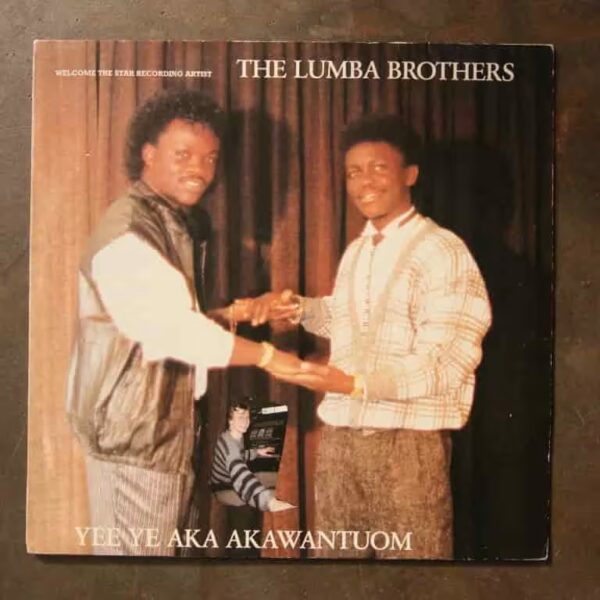
Recorded in Germany not by accident, but by necessity, the song was a confession from two young Ghanaian men who had crossed oceans with big dreams, only to find themselves fighting cold winters, language barriers, and homesickness that chewed at the soul.
The song was released off the debut album of the same name as the lead single by the Lumba Brothers, which included a young Daddy Lumba and Nana Acheampong. The title alone, Yɛɛyɛ Aka Akwantuo Mu, sets the tone. This was an album about struggle, transition, and survival.
Yɛɛyɛ Aka Akwantuo Mu wasn’t just a song. It was a bleeding letter from the heart of Ghana’s migrant generation. To understand Yɛɛyɛ Aka Akwantuo Mu, you must first understand Ghana in the 1980s — a nation gasping for economic breath.

The country was coming out of a turbulent decade. Military coups, economic collapse, and IMF-led structural adjustments had shattered national confidence. Inflation was rampant, jobs were scarce, and even university graduates felt it. In short, hope was a scarce commodity.
Ghana was under PNDC rule, led by Jerry John Rawlings. While his regime brought some reforms, they came with austerity. Public sector cuts, wage freezes, and taxes that prompted the average Ghanaian to hustle harder for less.
Families began selling land, goats, or jewelry just to send one child abroad, often to Germany, Italy, or the UK. The idea was simple — go, survive, and send something back.
This mass movement birthed what would become Ghana’s first major migration wave to Europe. That’s the world Daddy Lumba and Nana Acheampong stepped into.
But life abroad wasn’t the glossy postcard they imagined. Instead of music studios, they found freezing weather, racism, odd jobs, and endless hustle. The struggle broke many. But Lumba and Acheampong turned their pain into power — and that power became the song Yɛɛyɛ Aka Akwantuo Mu.
Released in 1989 as the title track of their debut album, this song gave a voice to a silent generation. It speaks about abandonment, loneliness in migration, the burden of responsibility, and disillusionment.
Migration was supposed to be salvation. But Lumba tells us plainly — Aburokyire yɛ den. (Life abroad is hard.) The song gently tears down the fantasy of greener pastures the average Ghanaian anticipates on their arrival abroad.
When the song hit radio stations in Ghana, it was like medicine and poison at once. Parents cried, finally understanding what their sons and daughters were going through abroad.
Migrants wept in taxis and bedrooms, finally hearing someone speak their truth out loud. Friends listened and regretted the promises they broke. People started seeing “aburokyire” not as a paradise, but a prison with better lighting.
The song killed the illusion of the easy foreign life and opened conversations in families, churches, and communities about what it really meant to travel and struggle.
To this day, the song is played during funerals, migration stories, homecoming ceremonies, and diaspora events. It has become the unofficial anthem of the Ghanaian migrant experience.
It helped redefine Highlife — not just as music for joy and celebration, but also as a tool for storytelling, mourning, and healing. And for many Ghanaians living abroad, the first time they truly cried wasn’t when they faced racism. It was when this song came through their cassette player.
Decades later, the journey hasn’t ended. Ghanaian youth still migrate to the USA, Germany, Canada, the UK, Dubai, and many other countries. Still hoping. Still praying. Still walking.
And guess what? Yɛɛyɛ Aka Akwantuo Mu still follows them, quietly playing in the background of their struggles.
Because truth is, sometimes, in this life — the journey never ends. The pain never speaks. The road never forgives. And the only thing you have left… is the journey.